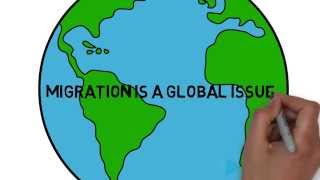
Introduction
Working women in the 1920ties. Copyright: Stadtarchiv Dornbirn
Industrial heritage is used to describe areas and objects which are related to industrial production. But more often than not such factories needed a lot of workers. And then migration started - from another region, from another state or from another country.
Industrialisation transformed entire societies and set masses of people in motion. Waves and Waves of foreign workers filled the factories. Are you interested to find out more about your region? This quest helps you to start a project about migration and Industry.
Author: Mag. Werner Matt, Stadtarchiv Dornbirn, Marktplatz 11, A-6850
Dornbirn, Austria. Email: This email address is being protected from spambots. You need JavaScript enabled to view it., Homepage: http://stadtarchiv.dornbirn.at
Task
Textile Industrie in Dornbirn (Austria), 1900. © City Archive Dornbirn
In this task you should work together with others to explore, research and document the migration in your region.
Then you work out a presentation with your results.
Your presentation should include:
- What does the term “migration”
mean? Give a short definition of your understanding.
- Did your understanding of
migration change during your research?
- Describe what kind of
migration you have found in your region. These questions should be helpful:
What did they leave?
How did they travel?
What help did they get?
How did it go for them?
Where did they work?
Where did they live?
Process
Work in groups (3-4) or pairs.
1. Before you start, listen to the given examples. This may give you an
idea of the term “migration”.
2. Talk in your group about migration. Do you know some migrants? Could
they answer the questions?
3. Start with the given examples. Then search in the internet about
“Migration” and your region. If you know museums, libraries or archives in your
region, search their web-pages for migration related topics.
4. Show your findings in your presentation.
Learning Outcomes
- The learner will have gained some basic knowledge about migration.
- Communication skills will have improved due to the work in the group and the presentation
- They will have gained the skills and the knowledge to use the Internet to gather information and to summarize the facts.
- Know a definition of “Migration”
- Get some understanding and facts about migration in your area
- Listen to some stories and link them general facts.
- Develop higher cognitive thinking skills
- Research and present facts and stories
- Concentration and social skills to work in a team
- Understand and complete a task
- Work with an abstract construct like “migration”
Links
What is migration? - National Geographic
http://www.nationalgeographic.com/xpeditions/lessons/09/g68/migrationguidestudent.pdf
What is migration? - Bitsize
http://www.bbc.co.uk/schools/gcsebitesize/geography/migration/migration_trends_rev1.shtml
“Back home in Carinthia all you could do was smash rocks”
https://stadtarchiv.dornbirn.at/menschenspuren/spaziergang/englisch/punkte-1-18/02-kaplan-bonetti-wohnhaus-steiermark/